Building long-term economic resilience, workforce readiness, and climate-responsive systems through evidence-led learning.
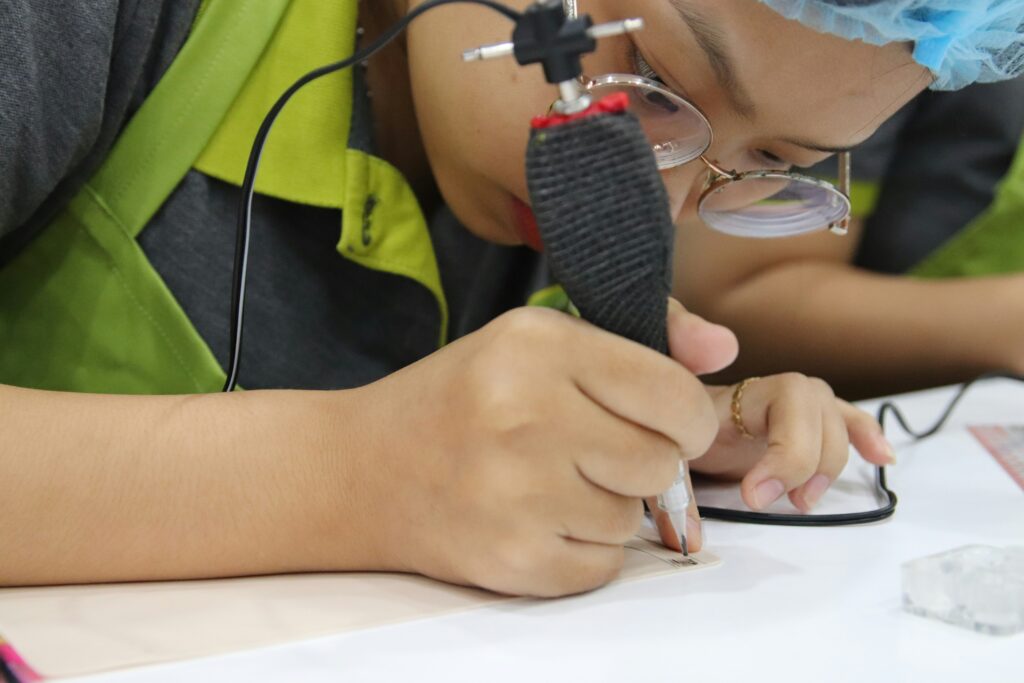
STEM education and sustainable development are deeply interconnected. Sustainable development is not achieved through fragmented projects or short-term interventions. It is built through systems that continuously generate skills, innovation, and institutional capacity.
At the heart of these systems is STEM education — the mechanism through which economies build resilience, labour markets remain relevant, and societies respond effectively to climate and technological change.
Science, Technology, Engineering, and Mathematics are no longer optional components of national development strategies. They form the intellectual and technical backbone required to support economic transformation, climate resilience, industrialisation, and workforce competitiveness.
When STEM education is intentional, evidence-driven, and aligned with real-world challenges, it delivers durable, scalable development outcomes.
Why STEM Education Is Central to Sustainable Development Outcomes
“Education systems that prioritise scientific thinking and technical competence build societies that can adapt, innovate, and sustain growth over time.”
Global development evidence consistently demonstrates a strong correlation between STEM capacity and long-term economic and social outcomes.
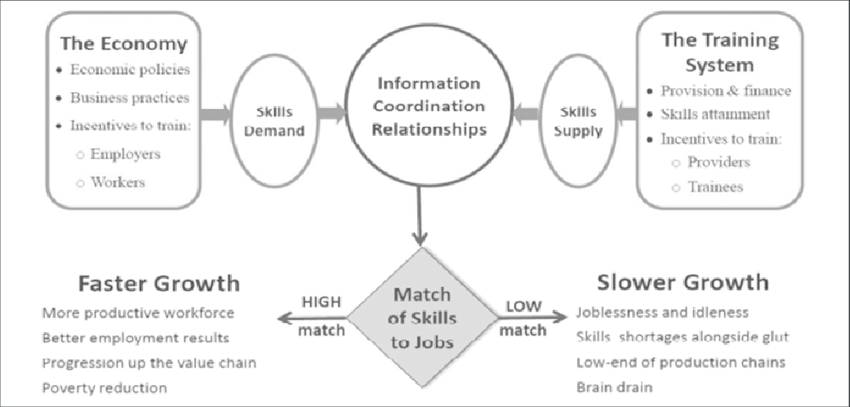
According to the World Bank, countries that invest in high-quality science and technical education experience faster productivity growth and stronger innovation ecosystems. A ResearchGate study further highlights that more than 75% of future jobs will require STEM-related competencies, particularly in data, engineering, and applied sciences.
Beyond employment, STEM education strengthens a country’s ability to:
- Design and maintain infrastructure systems
- Respond to climate and environmental challenges
- Build resilient health and energy systems
- Inform public policy through data and research
Without a robust STEM pipeline, development initiatives struggle to scale, adapt, or sustain impact.
From Education Access to Sustainable Development Impact
Key Question: What happens when education systems move beyond enrolment numbers to measurable development outcomes?
While expanding access to education remains essential, the development challenge has shifted. The critical question is no longer who has access, but what outcomes education delivers.
Evidence from organisations such as the OECD shows that countries prioritising applied STEM learning outperform peers in innovation, productivity, and workforce alignment.
Development impact increases when STEM systems prioritise:
- Curriculum relevance to local and global challenges
- Teacher capacity for applied and inquiry-based learning
- Access to functional laboratories, tools, and technology
- Clear pathways from education to industry, research, and entrepreneurship
Systems that fail to make this transition often produce graduates without the competencies required to solve real-world problems.
Evidence-Led Thinking: The Differentiator
Why evidence matters: Sustainable development strategies succeed when decisions are guided by data, experimentation, and continuous learning.
Sustainable development depends on decisions grounded in data, experimentation, and continuous learning. STEM education embeds these principles early—training learners to analyse problems, test assumptions, and adapt solutions.
The UN Sustainable Development Solutions Network consistently emphasises that evidence-led education systems reduce inefficiencies in development planning and improve long-term outcomes.
An evidence-led STEM ecosystem:
- Improves policy design and implementation
- Strengthens institutional decision-making
- Reduces development inefficiencies
- Enables scalable and replicable solutions
The result is not short-term success metrics, but long-term system resilience.
Beyond Skills: Building Institutional and Human Capital
The long-term value of STEM education extends beyond individual skill acquisition. Strong STEM systems cultivate:
- Critical and systems thinking
- Innovation-oriented mindsets
- Technical leadership capacity
- Cross-sector problem-solving capabilities
Research from the International Labour Organization confirms this link. In its Skills and Lifelong Learning 2030 strategy, the ILO notes that “skills development is a central driver of productivity, employability and inclusive growth in rapidly changing labour markets.” Similarly, the ILO’s report Skills for a Greener Future: A Global View emphasises that “the transition to new technologies and sustainable economies is fundamentally a skills challenge,” requiring strong scientific, technical, and problem-solving competencies to protect jobs and create new employment opportunities.
These attributes are essential for sustaining development gains across generations.
The Strategic Imperative
STEM education must be treated as a development strategy—not a sectoral add-on.
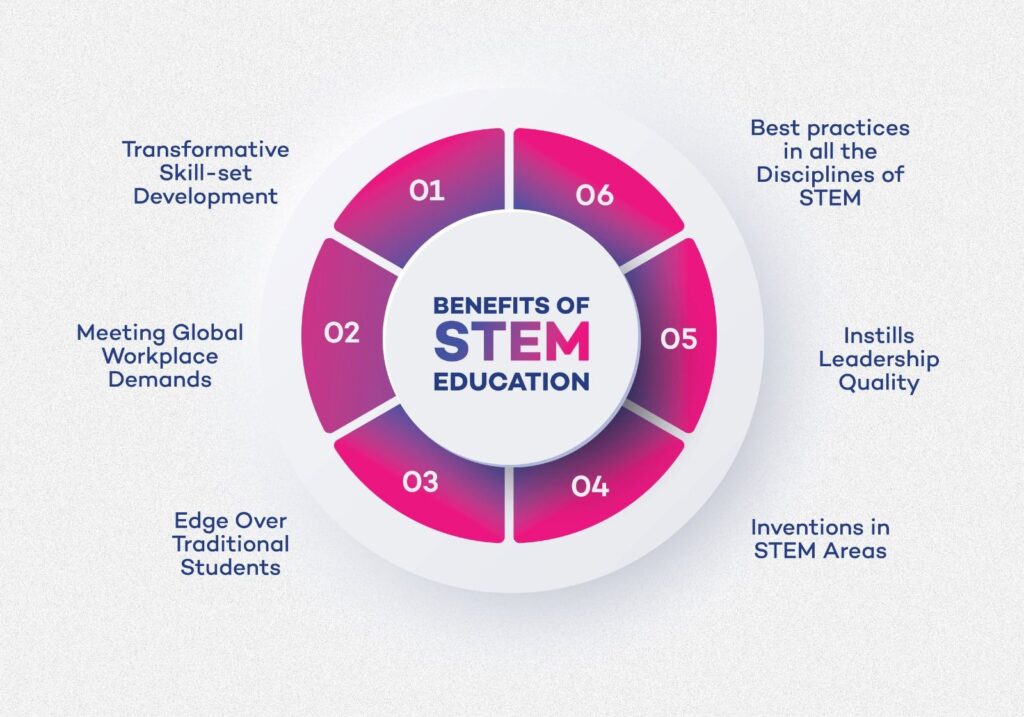
When integrated into national planning and sustainability frameworks, STEM education becomes a multiplier across climate action, health systems, infrastructure, and industrial growth, directly supporting the UN Sustainable Development Goals.
The evidence is clear:
- Strategic STEM investment strengthens development outcomes
- Evidence-led systems outperform assumption-led interventions
- Long-term impact depends on education systems built for relevance and resilience
STEM education is not just about preparing students for jobs. It is about building the intellectual infrastructure that underpins sustainable development.
Executive Brief for Policymakers and Donors
This brief complements our ongoing work on education systems strengthening and sustainable innovation programmes across multiple regions.
Key Insight: Sustainable development outcomes improve significantly when STEM education is integrated into long-term national and institutional strategies.
Strategic Focus Areas:
- Curriculum aligned with real-world challenges
- Teacher development and applied pedagogy
- Functional learning infrastructure and tools
- Clear pathways from education to industry and research
Conclusion: Investment in STEM education delivers compounding returns across economic growth, sustainability, and institutional capacity.
Recommended Reading & References
- World Bank – Education Overview: https://www.worldbank.org/en/topic/education/overview
- UNESCO Science Report: https://www.unesco.org/en/natural-sciences/science-technology/unesco-science-report
- OECD Education Policy Analysis: https://www.oecd.org/education/
- UN Sustainable Development Solutions Network: https://www.unsdsn.org/
- International Labour Organization – Skills & Employability: https://www.ilo.org/global/topics/skills-knowledge-and-employability/lang–en/index.htm
- UN Sustainable Development Goals: https://sdgs.un.org/goals